
Reflection #1
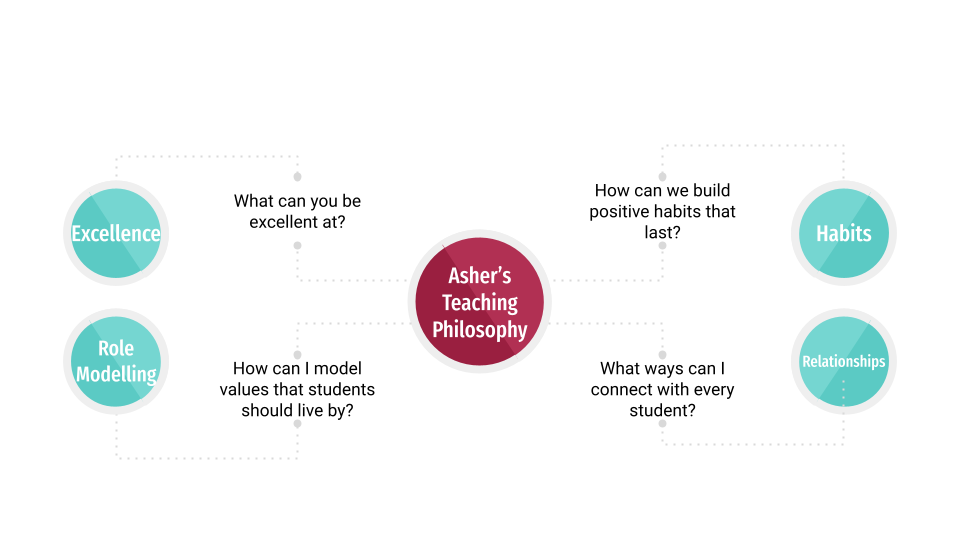
All of my teaching values center around excellence. I want to find ways to inspire students to become excellent in the areas of their life. Oftentimes, this will involve inspiring students in a particular area; hopefully ones that connect to areas in the classroom, but sometimes not. Regardless, the classroom can serve as an area from which we can build habits of excellence. This can be shown in many ways, from social skills, to work habits, to punctuality and organization. Part of the way that this is done is that we can model these values and habits in the way that we teach and interact with our students. This involves our attitude, organization, and the quality of our teaching. But it also requires a relational understanding of the students that we have in our class. Knowledge of what their goals are, what they enjoy, and what obstacles they may face can help us put students in a position where they can succeed in life, and have the tools to do so.
Indigenous Teaching Philosophies
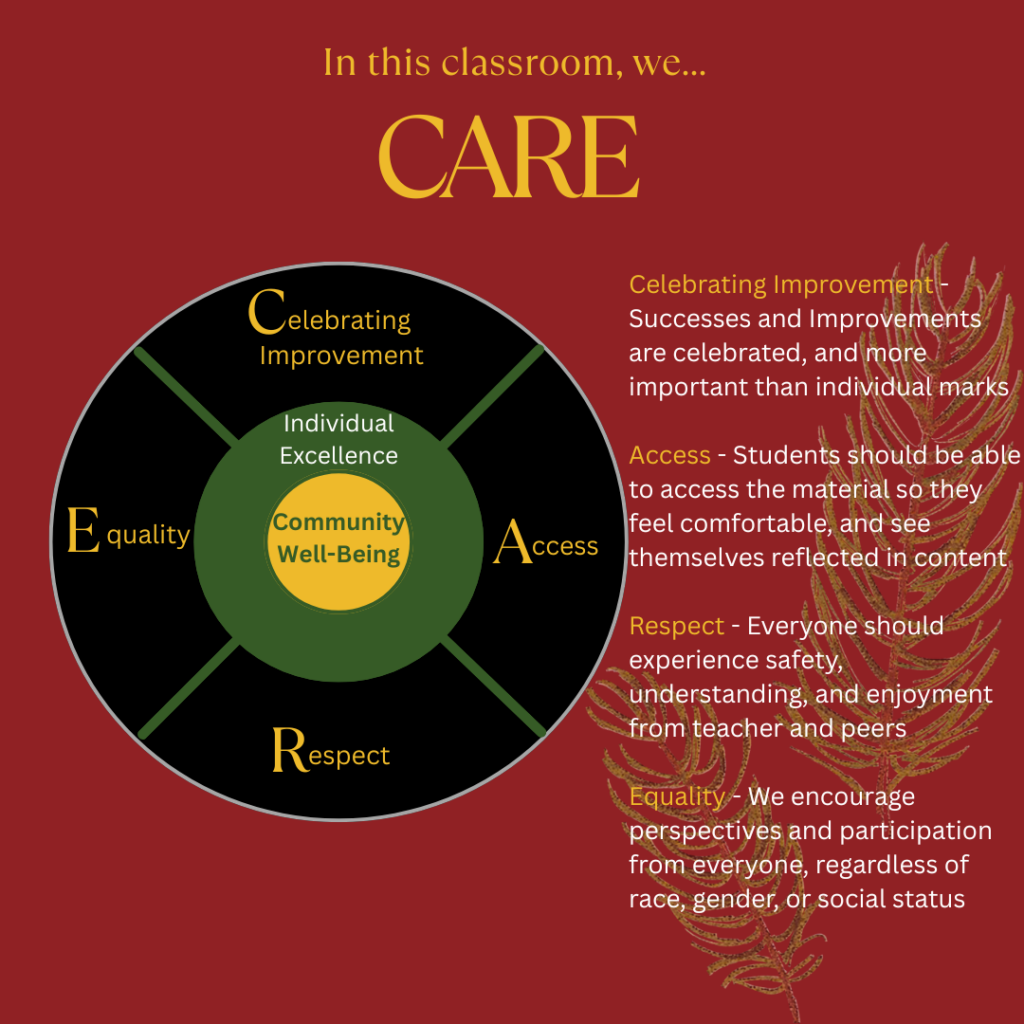
Access. Students should be able to find ways to understand the learning, and see their perspectives present in the material. For Indigenous students, this may mean using a lot of verbal cues, stories, and relating material to their home and community contexts. No one should feel like their style of learning, or life experiences are being ignored, and a lot of this is shown through the lessons that we give, and the methods we use for delivery, as well as the way we allow learning to be shown
Equality. Students should all have the same opportunity to engage with the material, and me the teacher. This means encouraging all perspectives, and shaping my classroom in a way that enables equality, including a circle when appropriate for class discussions. This also means that I hold myself to the same standards I hold my students to, and I yield some power to my students in order to enforce this.
Celebrating Improvement. Assessment will be collected in many ways, as triangulation and multiple means of representing learning has been emphasized. I don’t want students to feel like they have to demonstrate learning the way that I have displayed it or the way that they think I’d want to see it. I want my feedback on learning to be personal, meaningful, and vision-oriented. If a student improves anything, this is the emphasis of my feedback. If I’ve pushed a thriving student to a new level, I’m going to celebrate them stepping up to the challenge no matter what the result of that is. This doesn’t mean that marks are only qualitative, but it does mean students consider more than just the grade they’ve received.
Respect. My classroom is based on a culture of respect, where students feel a sense of understanding, safety, and enjoyment from me and their peers when in my classroom. I also emphasize that people may convey respect in different ways, and we should understand the intentions of someone’s actions before judgement. Respect is shown through listening, effort, connecting with other students, and asking questions. This doesn’t mean sitting still at all times, judging or distracting others, or expecting perfection from anyone. But it does mean approaching people with a desire to understand them and their situation, as much as we want to understand classroom content.
These four keywords conveniently create the acronym CARE, and the concepts of caring as a teacher can be used to introduce these tenants. As a teacher, I care to get to know you as a student and how you are treated in my classroom. I care enough to see improvement and point it out. I care to invite voices different than my own, in experiences, perspectives, and knowledge levels.
Past
I knew a very limited amount of Indigenous worldviews coming into this program. Of course, I was close to some of those communities in my time living in Kamloops, but didn’t have a lot of extended time to consider Indigenous worldviews or learn about lived experiences. I knew about residential schools, generational trauma, and income inequality, but more a knowledge to recite than to actually understand and deeply consider.
Naturally, some of this program discussed this history, but also how these experiences impact students today. What are some of the barriers that continue to face Indigenous students? How can they be seen and aided in these struggles, especially in a place that may seem like an adverse situation? What does their culture, family structure, values and responsibilities look like? How can we help them achieve a goal?
Present
One obvious way we can implement indigenous values into our classroom is explicitly. This can either be done by having meaningful discussion about indigenous history (when the time is right), which can help other students understand, but also show that we care about those experiences. Similarly, indigenous principles of learning play a role in how my class should operate. 3 major values stand out to me: the value of story, of generational roles, and of patience and time. These values are accessible to all students, and yet deeply resonate with Indigenous students, and provide them a window from which to access a variety of material.
Above all, which we discussed in class here as well, is that relationships and empathy should be front and centre. We are not always going to understand their experience, but we can know them and help be a stable presence on a micro level.
Future
One way I’d like to engage with standard 9 more is by having more individual conversations with indigenous parents or elders. This is one area of my learning that I am lacking in this area. I would love to hear more about the meaning behind some of the conventions that we use around indigenous people, including land acknowledgements and specific days on the calendar. Are these meaningful, and how can someone of my background convey that meaning to other students of my background? I’d also like to know the learning background of many of my students. I want students to build habits of excellence, but should I alter my approach for Indigenous students that are economically disadvantaged, or have generational trauma? These questions and many more would be a great starting point for a conversation.